AI Economics

How is AI changing the economy? A source-backed timeline of research, arguments, and scenarios.

Filter timeline

Filter
Format
Topic
  1. Europe 2031: What getting AI wrong means for us

    Europe 2031 presents a deliberately pessimistic scenario in which Europe responds too slowly to rapid AI progress and becomes dependent on American and Chinese systems. It traces how gaps in compute, capital, adoption, and institutional speed could weaken productivity, public finances, and political autonomy.

  2. What will be scarce?

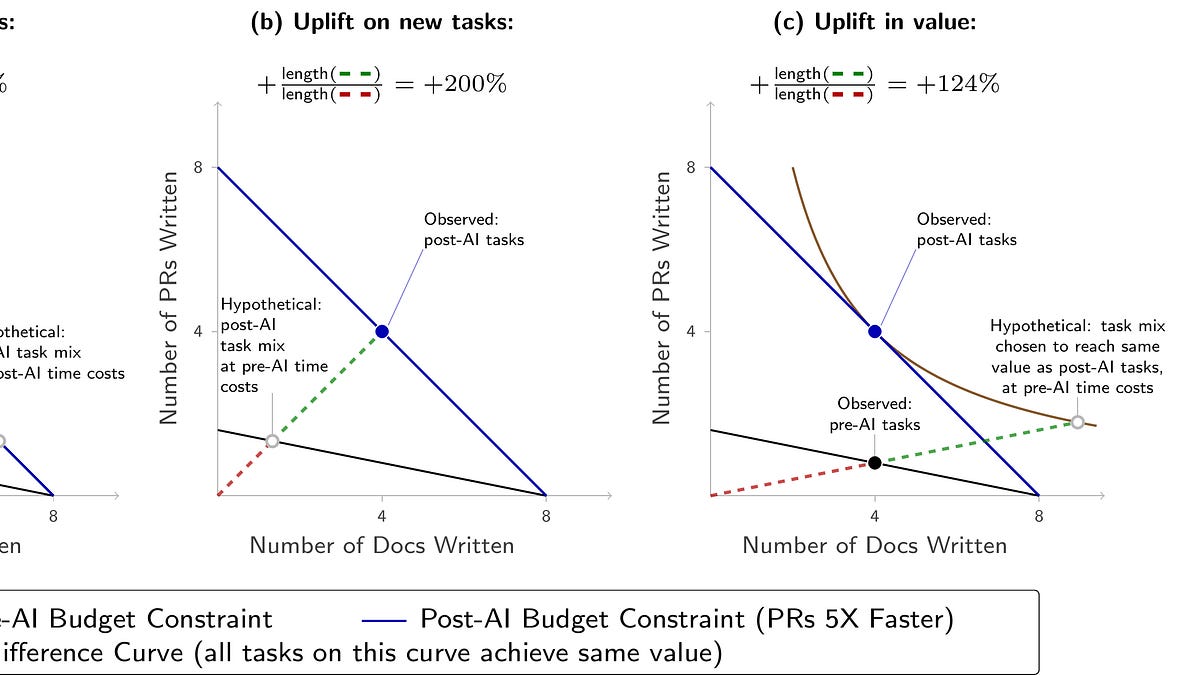
    Imas argues that cheap AI-produced goods need not make human labor economically irrelevant. As automated goods get cheaper and incomes rise, spending may move toward a “relational sector”—care, education, hospitality, craft, and other activities where human involvement is part of the value.

  3. A.I. and Our Economic Future

    Jones argues that automating intelligence could break with the long stability of economic growth, but that large gains may arrive slowly because progress remains constrained by unautomated “weak links.” Those same weak links can make systems vulnerable when AI makes it easier to damage one critical component.

  4. AI as Normal Technology

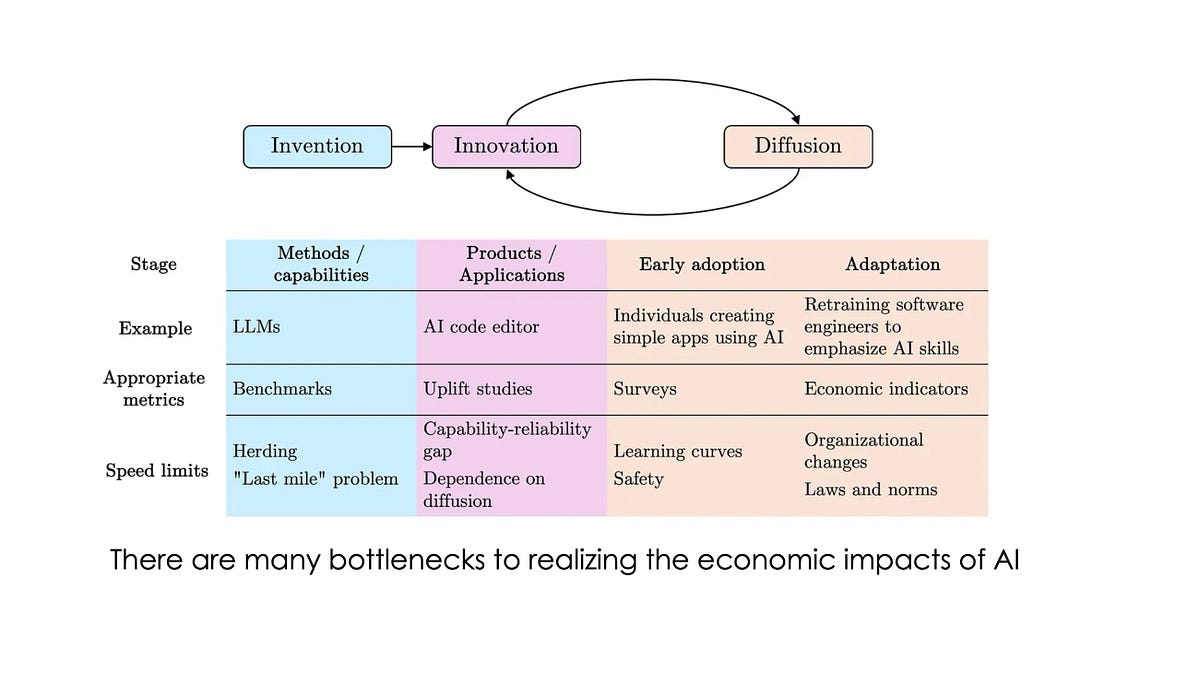
    Narayanan and Kapoor argue that even transformative AI should be understood as a technology embedded in firms, markets, laws, and social institutions—not as an autonomous species. Capabilities matter, but economic effects also require products, adoption, organizational change, and diffusion.

  5. AI 2027

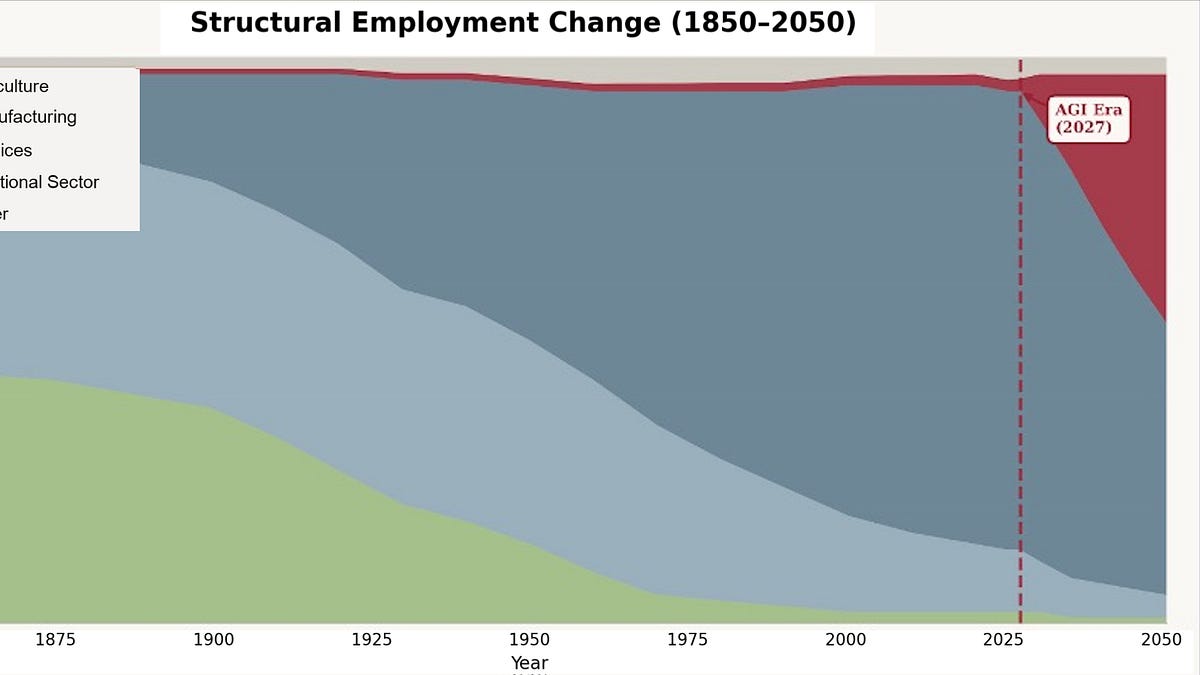
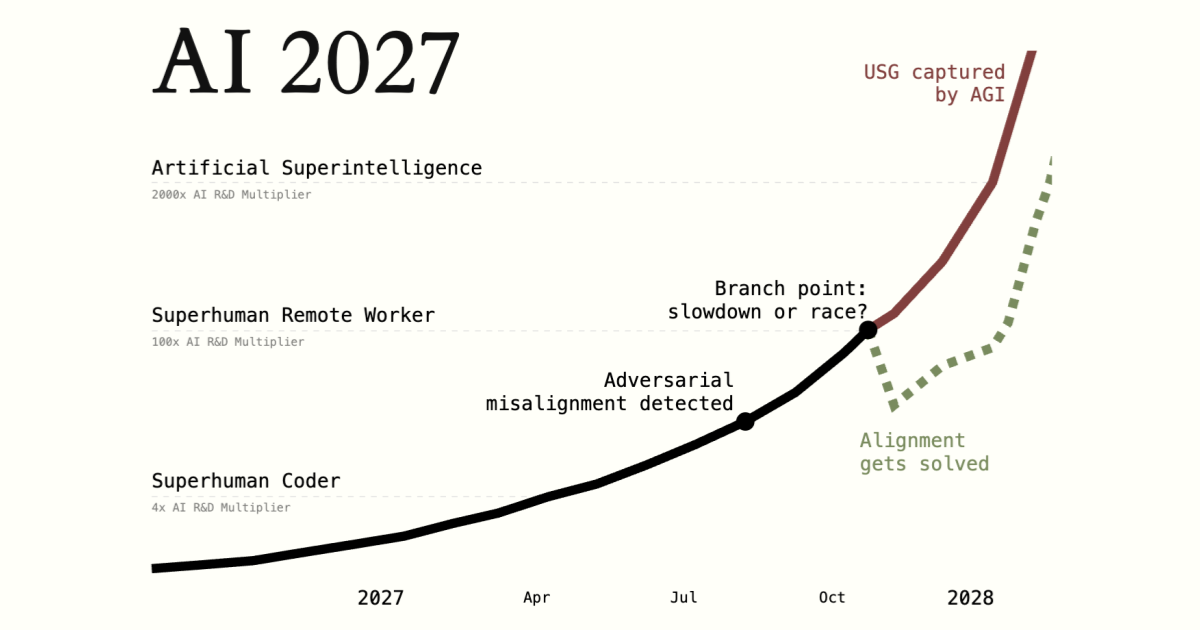
    AI 2027 lays out a month-by-month scenario in which increasingly capable agents automate AI R&D, accelerating progress and concentrating economic and strategic power in a small number of labs. It makes the scenario concrete with estimates for compute, capital spending, power use, revenue, labor-market disruption, and a branching race-versus-slowdown ending.

  6. Machines of Loving Grace

    Amodei imagines a “country of geniuses in a datacenter” compressing decades of progress in health, economic development, and governance into a few years. He expects physical, institutional, and data bottlenecks to slow the transition, while sufficiently cheap and general AI may eventually make today’s labor-based economic settlement obsolete.

  7. Situational Awareness: The Decade Ahead

    Aschenbrenner argues that scaling, algorithmic progress, and better use of models could produce AGI by 2027 and then a rapid intelligence explosion. Economically, the essay centers a trillion-dollar buildout of chips, data centers, and electricity alongside a US–China race for the productive and military advantages of superintelligence.

  8. Intermediate Goods and Weak Links in the Theory of Economic Development

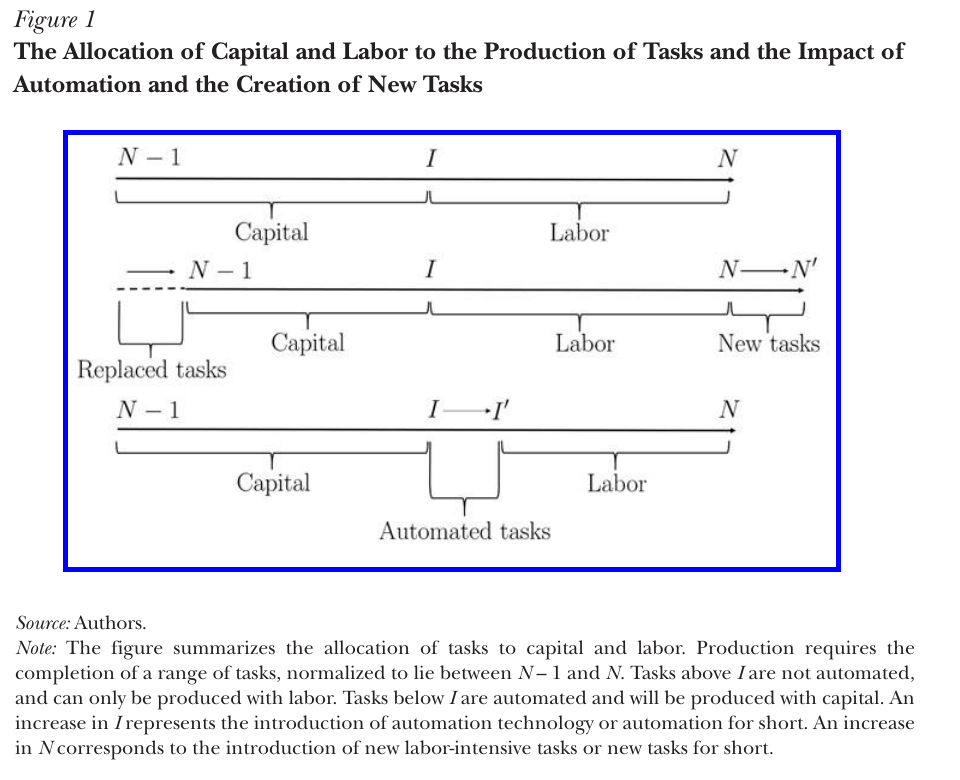
    Jones shows how intermediate-goods linkages multiply productivity effects and how complementarity makes production chains vulnerable to weak links: one poor input can sharply reduce total output. Written to explain cross-country income gaps, the framework later became a useful way to understand why automating many tasks may yield limited gains while a few essential tasks remain hard.