China is more exposed to semiconductor supply-chain disruptions than the US
Summary
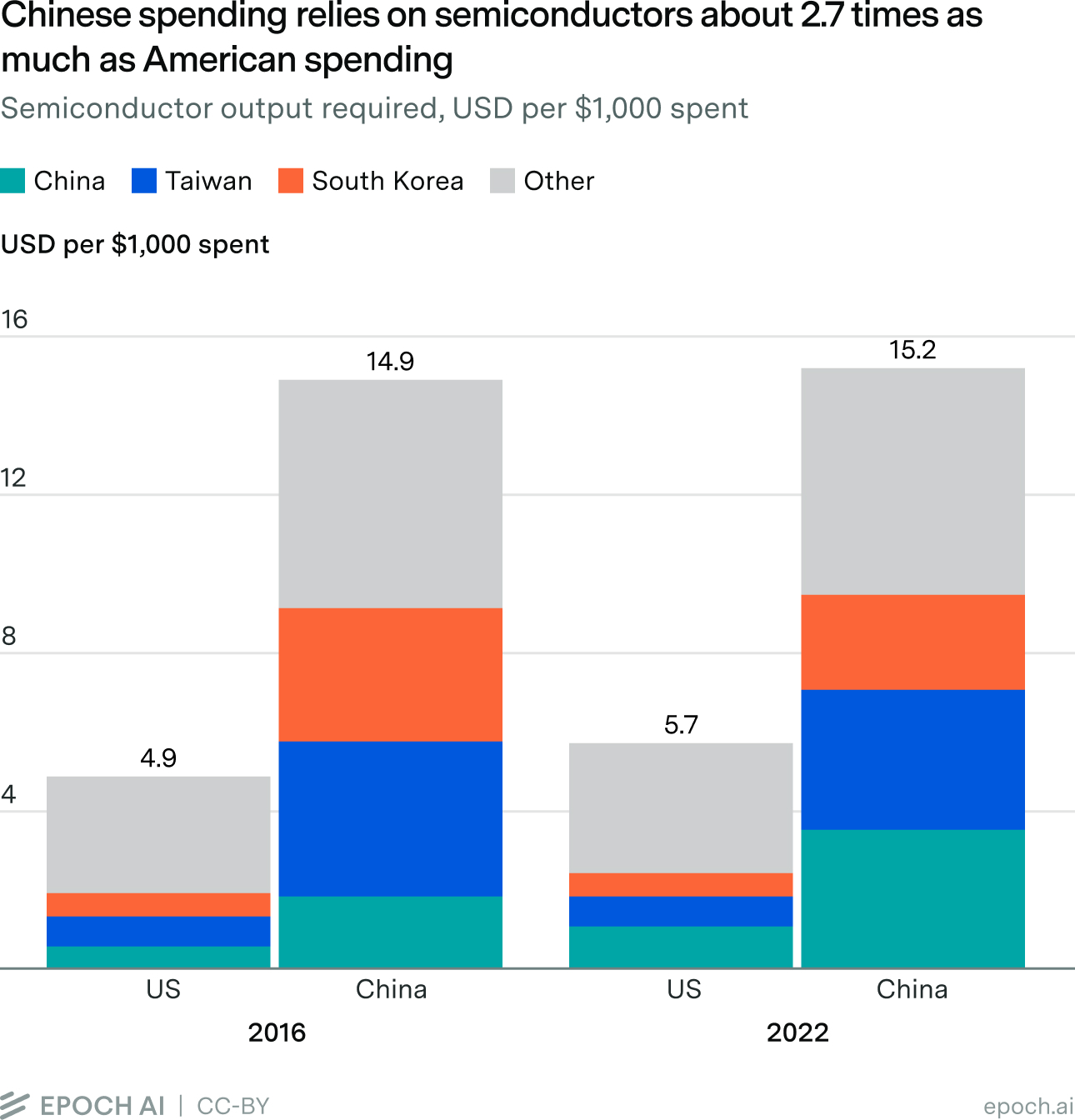
Carey separates semiconductors from broader electronics in international input-output tables. In the 2022 estimates, a dollar of Chinese final spending supports 2.7 times as much chip-producer revenue as a US dollar. Conditional trade simulations find larger Chinese losses from a Taiwan supply shock combined with China–West decoupling.
Why it matters
AI infrastructure depends on chips moving through international production networks. The study shows why direct imports alone miss exposure and why industrial competition must account for complementary inputs and supply-chain dependencies.
What to keep in mind
Exposure is estimated from imputed, aggregated historical data; a coarser 2024 check narrows the gap. Simulated losses depend on substitution and trade assumptions and omit financial fallout, inventories and firm-level bottlenecks. They are not observed losses or probabilities of disruption, and the study is not specific to AI chips.