Robots and Jobs: Evidence from US Labor Markets
Summary
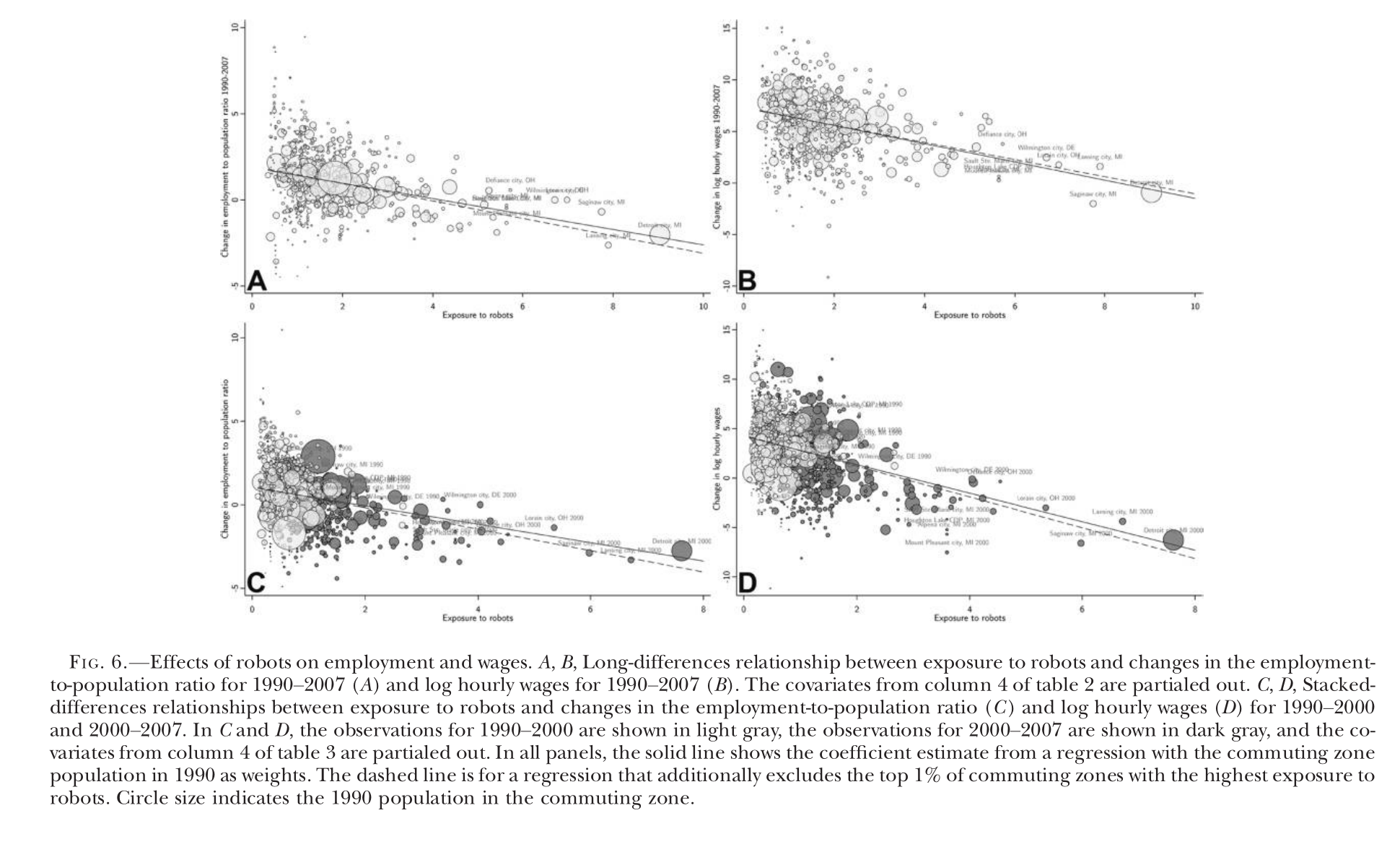
Acemoglu and Restrepo study industrial-robot adoption and US local labor markets between 1990 and 2007. Combining initial industry employment with European robot-adoption trends, they estimate lower employment and wages in more exposed commuting zones. A task model distinguishes workers displaced by automation from productivity gains that can raise demand elsewhere.
Why it matters
The study anchors AI automation debates in evidence on a previous technology that replaced tasks. It shows why technical exposure, productivity gains and labor-market outcomes are separate questions, with costs that can concentrate in particular places and occupations.
What to keep in mind
The empirical strategy assumes robot exposure is not confounded by other industry shocks; the automotive industry carries substantial identifying weight. National effects require additional assumptions about trade and income spillovers. These historical industrial robots differ from today’s generative AI and do not predict its employment effects.