Three challenges facing compute-based AI policies
Summary
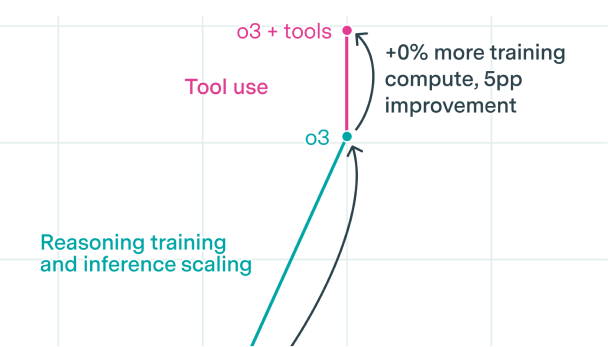
Somala, Ho, and Krier argue that a simple sum of training FLOP increasingly misses where AI capability comes from. Pre-training and post-training have different returns, distillation and synthetic-data pipelines complicate accounting, and inference budgets, tools, and scaffolds can raise deployed capability without changing training compute.
Why it matters
Compute thresholds are attractive because they are auditable, but they may become weaker proxies for the capabilities of real systems as training pipelines and application-level engineering evolve.
What to keep in mind
Public compute estimates are uncertain, including the authors' examples, and benchmark gains do not directly measure economic deployment or risk. Compute can remain useful as one screening signal without being a complete capability measure.