Automation and New Tasks: How Technology Displaces and Reinstates Labor
· The journal identifies the Spring 2019 issue without a publication day; 15 May is a neutral sorting date.
Summary
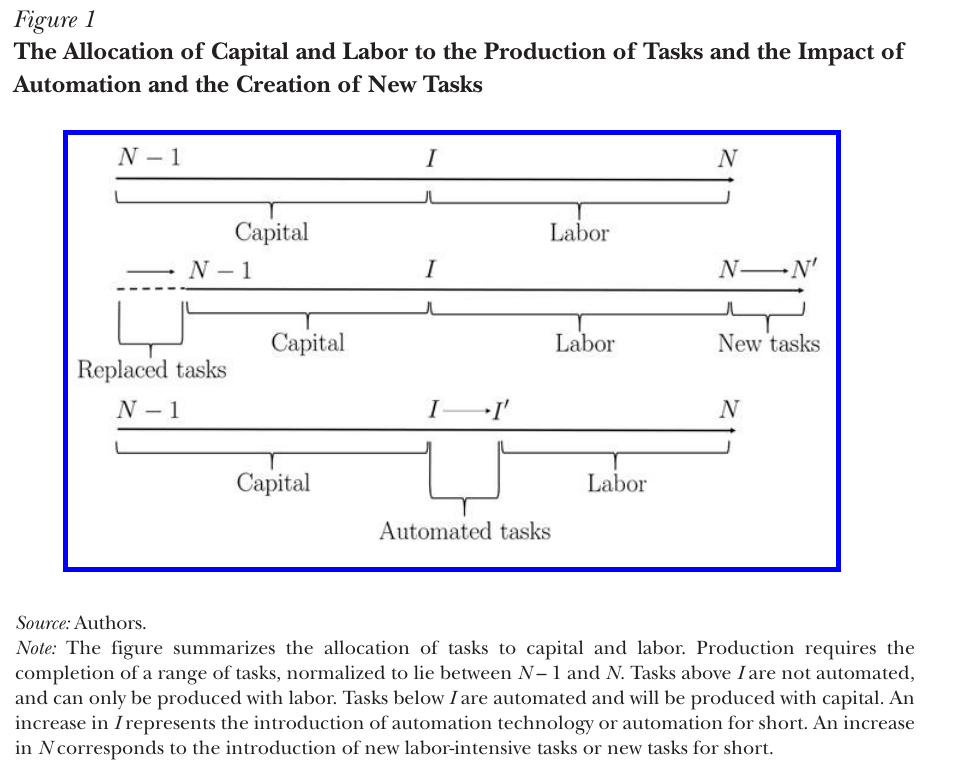
Acemoglu and Restrepo distinguish automation that moves existing tasks from workers to machines from new tasks that create demand for labor. Productivity gains can offset displacement, but need not do so. Their decomposition of US industry data associates slower wage-bill growth after 1987 with stronger displacement, weaker creation of new labor-intensive tasks and slower productivity growth.
Why it matters
The framework explains why cheaper AI production and healthy labor demand are separate outcomes. New tasks, rather than automatic compensation through productivity alone, help determine whether workers share in technological gains.
What to keep in mind
This combines theory with a historical accounting decomposition, not a causal estimate of generative AI. Task changes are inferred from labor-share residuals and assumptions about substitution and competitive markets. Separating displacement from new tasks needs further assumptions; changing markups, bargaining and offshoring can complicate interpretation.