The AI expectations gap
Summary
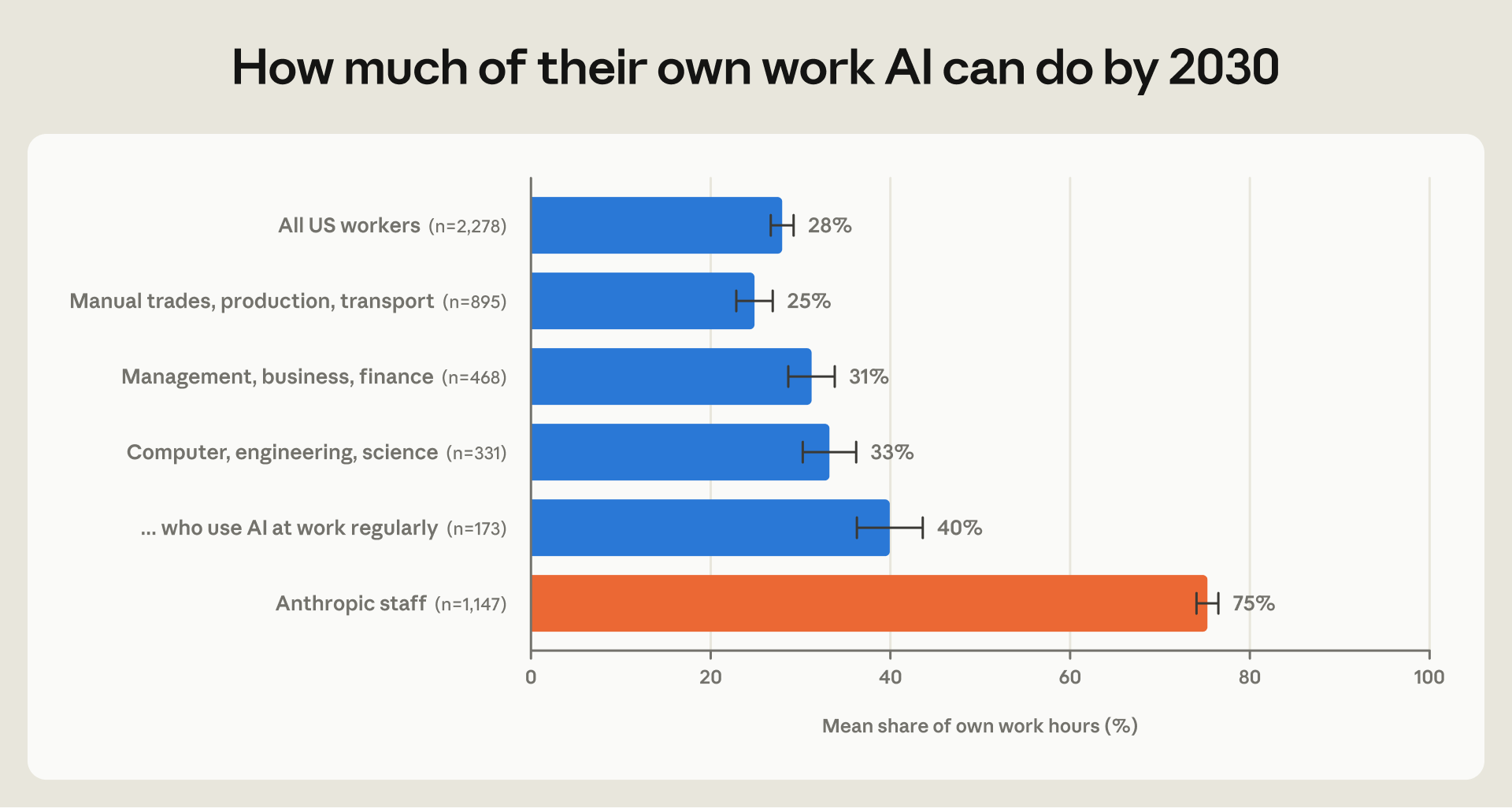
August surveys compare 10,980 US adults with 1,334 Anthropic staff. Employed US respondents expect AI to be capable of doing an average 28% of their current work hours by 2030, versus 75% among staff. Both groups associate greater expected automation of their own work with higher expected unemployment. These are beliefs about the future, not measured capabilities or job losses.
Why it matters
The study separates expectations about technical capability, adoption and work reorganization. It makes disagreement behind AI-economic scenarios measurable without assuming that frontier-lab employees or the public have the correct forecast.
What to keep in mind
The public sample is an online opt-in panel with demographic weights; staff responses are unweighted. Response formats and missing-answer handling differ, and AI exposure is not randomly assigned. Associations do not explain why beliefs differ. GDP results elsewhere in the report are conditional model translations of survey answers, not direct forecasts or observed growth.